

Authors
Below is a list of the authors whose works are already in our catalog or are currently in the process of being edited.
Mykhailo Kotsiubynsky
Mykhailo Kotsiubynsky (1864–1913) was an essential Ukrainian writer who marked the transition of his country's literature from traditional realism toward modernism and impressionism. He is often described as a "master of light and shadow" due to his almost pictorial ability to capture moods and landscapes with a sensitivity reminiscent of European impressionist painters.
His importance lies in having endowed the Ukrainian language with a sophisticated urban and psychological aesthetic, moving it away from the purely peasant stereotype that predominated in the nineteenth century. In his works, external conflicts often take a backseat to the exploration of the mental processes and sensory perceptions of his characters.
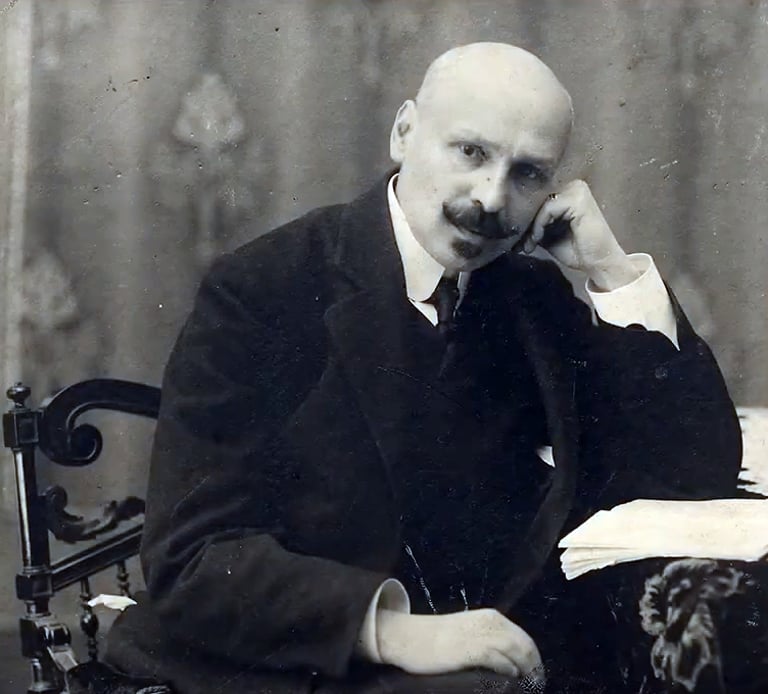
His most universally known work is Shadows of Forgotten Ancestors (Tini zabutykh predkiv), a lyrical piece that explores the life, folklore, and mysticism of the Hutsul people in the Carpathians. Decades later, it would inspire one of the most acclaimed films in cinematic history, directed by Sergei Parajanov. Kotsiubynsky was also a cosmopolitan intellectual who traveled across Europe and maintained close relationships with other greats of his time, always seeking to integrate Ukrainian culture into the flow of universal intellectual currents. His legacy is that of an author who knew how to see beauty in nature and complexity in the human soul, defending his people's identity through indisputable artistic excellence.
Lesya Ukrainka
Lesya Ukrainka (1871–1913) was one of the most distinguished figures in Ukrainian literature, standing out as a poet, playwright, literary critic, and political activist. Alongside Taras Shevchenko and Ivan Franko, she forms the fundamental triad of her country's letters, serving as the female voice who modernized Ukrainian literature by providing it with a European and cosmopolitan perspective.
Despite struggling for nearly her entire life against chronic bone tuberculosis, she produced a vast and profound body of work that moved away from traditional realism to embrace neo-romanticism and symbolism.
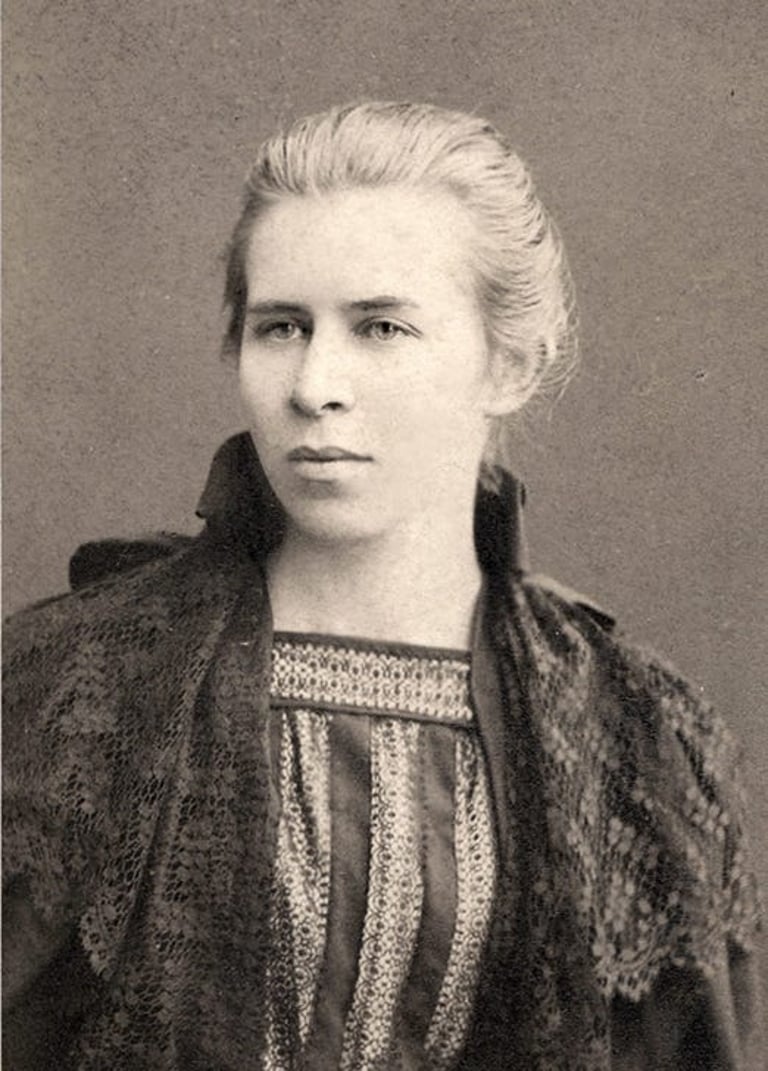
Her importance lies especially in her ability to reinterpret universal myths and historical themes from a national perspective, as seen in her dramatic masterpiece, The Forest Song (Lisova pisnya), where she intertwines Ukrainian folklore with philosophical reflections on freedom and human nature. Ukrainka was also an exceptional polyglot who translated authors such as Homer, Shakespeare, and Byron into Ukrainian, thereby integrating her culture into the great literary dialogue of the West. In a context of intense imperial oppression, her life and work became a symbol of intellectual resistance and the struggle for both national and women's emancipation.
Valerian Pidmohylny
Valerian Pidmohylny (1901–1937) was a novelist, translator, and literary critic, considered one of the most brilliant figures of the Executed Renaissance—the generation of Ukrainian intellectuals in the 1920s that was decimated by Stalinist purges.
Unlike many of his contemporaries who focused on socialist realism or revolutionary romanticism, Pidmohylny stood out as the pioneer of existentialism in Ukrainian literature, focusing on the alienation of the individual, moral dilemmas, and the tension between human instincts and social structures.
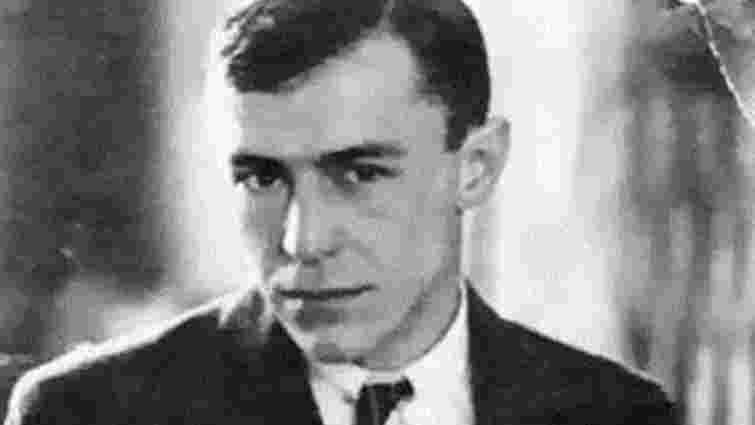
His magnum opus, the novel The City (Misto), published in 1928, marked a milestone by moving away from predominant rural themes to explore urban life and the transformation of a young peasant attempting to conquer Kyiv, facing modernity and his own ethical ambiguity. In addition to his creative work, he was a prolific translator who introduced the works of French classics such as Maupassant, Balzac, and Anatole France into Ukrainian, which endowed his own prose with exceptional precision and technical sobriety. Tragically, his career was cut short by the Soviet Great Terror; he was arrested in 1934 and finally executed in the Sandarmokh forest in 1937, leaving an irreplaceable void in the evolution of Ukrainian psychological narrative.
Panas Myrny e Ivan Bilyk
Panas Myrny (pseudonym of Panas Rudchenko) and Ivan Bilyk (pseudonym of Ivan Rudchenko) were two brothers who played a crucial role in the development of nineteenth-century Ukrainian realistic prose. Although both were committed intellectuals, Panas is primarily remembered as the great novelist of the family, while Ivan stood out as a folklorist, literary critic, and translator, in addition to being an essential collaborator in structuring his brother's most ambitious works.
Their most significant contribution to the cultural heritage was the co-authorship of the monumental novel Do Oxen Low When Mangers are Full? (Khiba revut voly, yak yasla povni?), published in 1880.
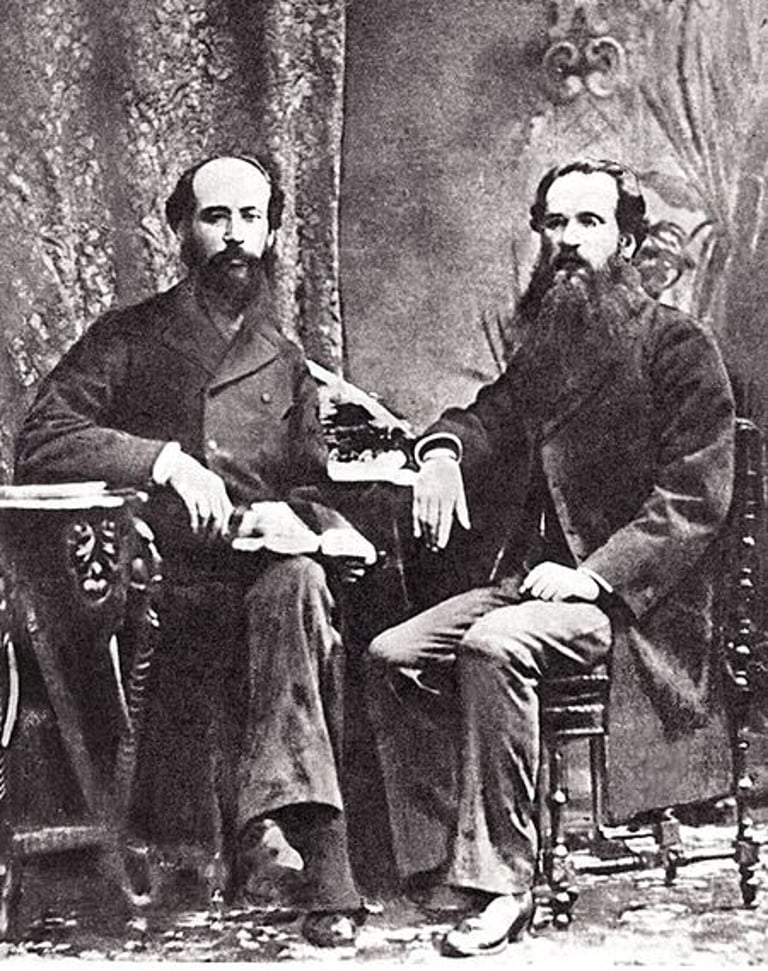
This work is considered the first social-psychological novel in Ukrainian literature; in it, the Rudchenko brothers managed to transcend the simple denunciation of serfdom to explore the deep roots of crime and social injustice through the life of the protagonist, Chipka. While Panas provided narrative richness and emotional depth, Ivan was responsible for the ethnographic accuracy and ideological cohesion of the text. Due to the censorship of the Russian Empire (the infamous Ems Ukaz), the novel originally had to be published in Geneva, becoming a symbol of literary resistance that refused to allow the Ukrainian language to be reduced to merely domestic or peasant use.
Olha Kobylianska
Olha Kobylianska (1863–1942) was a pioneering writer and feminist, considered the central figure of early modernism in Ukrainian literature. Her work broke away from traditional populism to focus on the psychology of the intellectual and emancipated woman, exploring themes such as self-determination, forbidden love, and the struggle against late nineteenth-century social conventions.
Born in the region of Bukovina (then part of the Austro-Hungarian Empire), Kobylianska grew up in a multicultural environment. Although her initial education was in German, she consciously chose to write in Ukrainian under the influence of figures such as Lesya Ukrainka, with whom she maintained a legendary friendship and correspondence.